From Awareness to Consciousness
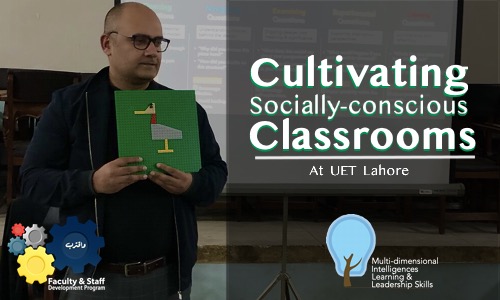
Cultivating Socially-Conscious Classrooms at UET Lahore
At the University of Engineering & Technology (UET) Lahore, the teaching goalposts are being reframed through a journey of awareness, reflection and service. Under the visionary leadership of Prof. Dr. Shahid Munir, Vice Chancellor, and Dr. Aneela Anwar, Lead Faculty & Staff Development Program (F&SDP), this initiative is transforming academic culture through socially-conscious learning.
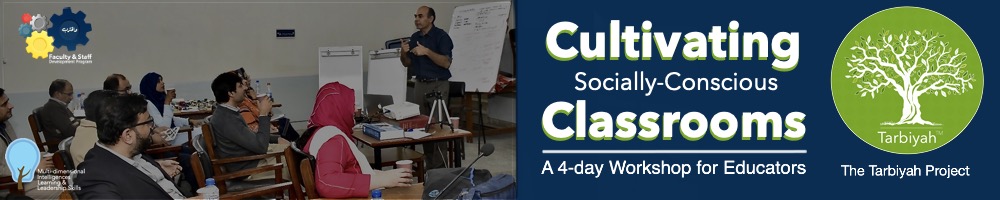
The four-day workshop, titled “Holistic Quality Teaching – Enhancing Learning Effectiveness via Social Consciousness,” was curated by MILLS™ Skills to inspire educators to view teaching not only as knowledge exchange but as moral consciousness in action. Essentially helping cultivate socially-conscious classrooms at UET. The workshops centered around Tarbiyah Curriculum, carried a singular aim of triggering social-consciousness within Faculty members. Following a successful roll-out, this workshop series has now converted into a University-wide initiative, expanding to Employees (Academic Administrators) via Amanāh Workshop Series.
It is my belief that, when educators begin to see teaching as a moral act of consciousness, classrooms become learning communities, and teaching transforms into nurturing (tarbiyah), essentially integrating taleem and tarbiyat.
From Iqra to Waq’tarib: The Call for Conscious Teaching
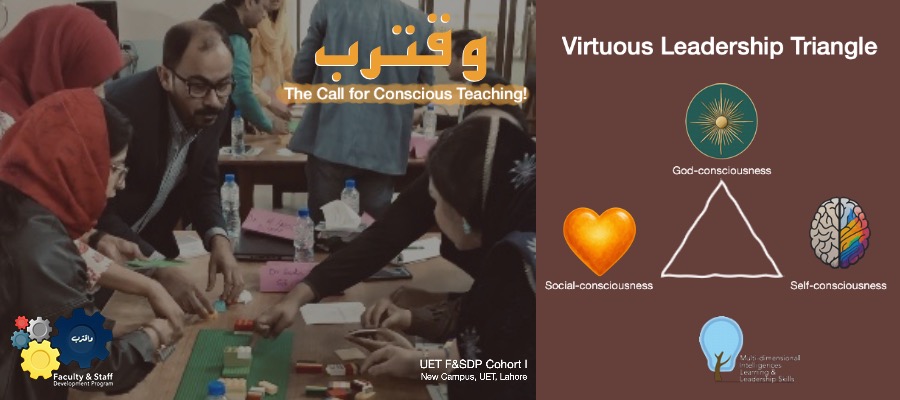
The Faculty & Staff Development Program began its journey with the creation of its identity, the F&SDP logo. Designed by MILLS™, the logo draws inspiration from UET’s cultural and spiritual heritage. While UET’s emblem is anchored by Iqra, the first word of Surāh Al-‘Alaq and the first revelation of the Qur’ān. The new logo completes this spiritual arc with the word Waq’tarib (meaning “come closer”), the last word of the same Surāh. Placed within interconnected gears, it reflects the spirit of collaboration, purpose, and motion that defines the program. Together, Iqra and Waq’tarib symbolize a continuous journey from knowledge to wisdom, from awareness to consciousness, reminding us that learning is both an inward and outward act of growth.
This connection also powers the Tarbiyah Curriculum, a framework developed by MILLS™ Skills to introduce three domains of Virtuous Leadership: God-consciousness, Self-consciousness, and Social-consciousness. Conscious-teaching workshop focuses on Social-consciousness, and the behavioural model driving it, supported by MILLS™ research, capturing living realities that shape behaviours, relationships, and classroom environments.
Designing Learning with Purpose
The workshop design was grounded in four imperatives agreed upon with UET’s Faculty & Staff Development Program Lead and Director Quality Enhancement Cell (QEC):
- Learning Environment: Recognising how faculty behaviours influence student engagement and learning outcomes.
- Behavioural Conduct: Understanding that how we teach is as crucial as what we teach.
- Behavioural Framework: Defining observable behavioural drivers for consistent evaluation and growth.
- Student Feedback: Standardising templates to help students assess and reflect on teaching styles.
To bring these imperatives to life, the workshop combined:
- A Behavioural Model mapping 3 clusters, 9 competencies, and 25 key behaviours.
- LEGO® Serious Play and Gamified Learning for collaborative problem-solving.
- Online self and peer profiling through the MILLS™ Portal, visualising behavioural data for faculty development.
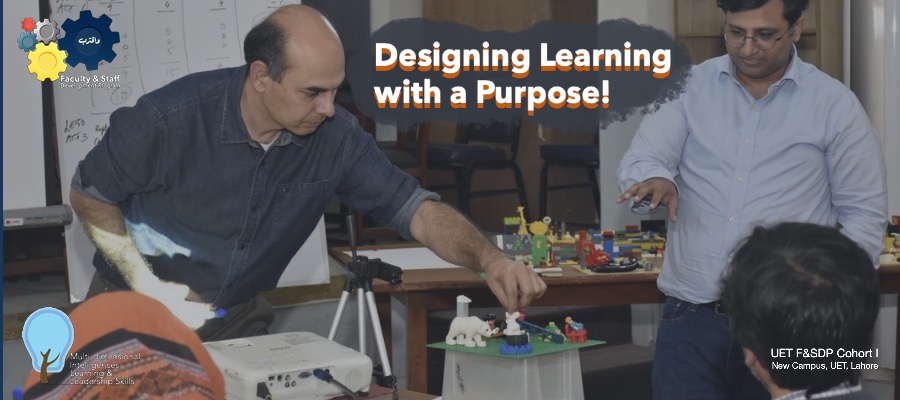
Inside the Four Days – cultivating socially-conscious classrooms at UET
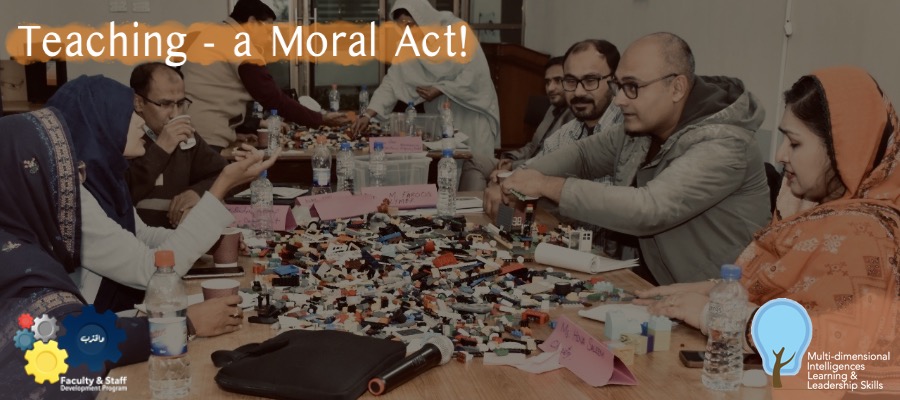
Over four days, the workshop unfolded as a journey from reflection to realisation, a practical expression of socially-conscious classrooms in action. The 3C Behavioural Framework: Compassion, Connection, and Courage, was carefully sequenced across the first three days, creating a natural progression of awareness and practice. Each day opened with an individual reflection, moved into group discussions, and culminated in cross-disciplinary team presentations that encouraged faculty to learn from diverse perspectives.
LEGO® Serious Fun was used early on to build a shared bond and a unified language among participants, setting the tone for collaborative inquiry. As the workshop advanced, LEGO® Serious Play™ became a medium for deeper exploration, used on Day 2 and Day 3 to model ideal classrooms and to segment students by psychographic tendencies. Through these builds, faculty translated abstract behaviours into tangible forms, giving shape to the relational and environmental aspects of teaching.
Group Think via Activity Sheets
The 3C activities were supported by structured activity sheets mapped across all behavioural competencies by cluster. Exercises such as the “Blame Game,” drawn from the ‘Vicious Circle’ concept of blame, shame, and fear of failure, helped participants recognise behavioural barriers that limit learning effectiveness. The final day shifted to online assessments and feedback through the MILLS™ Portal, where self and peer profiling offered data-driven insights into behavioural patterns. By the end of the workshop, participants had moved through a complete learning cycle, from introspection to shared understanding, anchored equally in experience, dialogue, and behavioural evidence.
Reflections from the Cohort
Feedback from the 22 participating faculty members underscored a strong endorsement for this behavioural and social approach to teaching:
- 95% agreed that their behaviours directly impact classroom learning.
- 87% endorsed the Social-Consciousness Triangle as a meaningful teaching framework.
- 85% found LEGO pedagogy effective in building collaboration and understanding.
One participant summarised the experience beautifully: “LEGO helped us translate abstract ideas of empathy, trust, and courage into visible structures of learning.” These insights reflect a shift from conventional teaching metrics to relational and reflective indicators of learning.
This workshop marks a shift from conventional academic metrics to reflective, human-centered indicators of learning. Faculty appreciated how self and peer assessments revealed dominant teaching styles and communication patterns, offering new insights into professional identity and growth.
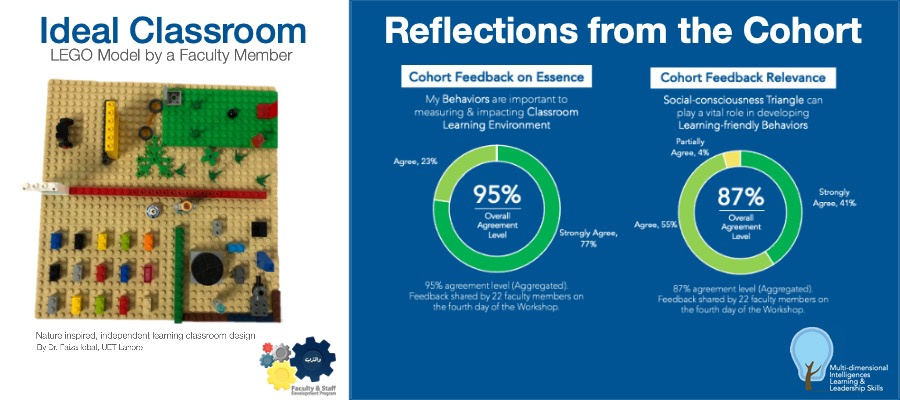
Building the Ideal Classroom
Among the many creative outputs, the Nature-Inspired Independent Learning Classroom designed by Dr. Faiza Iqbal (Department of Computer Science) stood out. Her model envisioned a space where the teacher acts as a facilitator, not a source, integrating practical work, exploration, and discussion to foster student independence.
Each LEGO® model became a metaphor for the values educators wished to nurture: curiosity, respect, and responsibility. Through these shared builds, abstract theories turned into tactile reflections of what a “learning-friendly” classroom could look like.
MILLS™ as Strategic Partner for F&SDP, UET
AlHamdollilah, the impact of this workshop has extended far beyond its four days. Driven by an overwhelming feedback for the first cohort of Assisstant Professors, Faculty & Staff Development Program, in collaboration with QEC, has institutionalised Tarbiyah Workshops for Faculty as well as for Academic Administrators (some 500 employees). MILLS™ is currently scheduling its 5th Workshop for Academic Administrators, called Amanāh (separate blog on that on our blogs section). As F&SDP expands, these initiatives aim to build a culture of socially-conscious classrooms at UET Lahore, where both faculty and administrators evolve together through shared purpose and continuous learning.
When teaching is rooted in virtues and values, learning becomes a moral act!
Read more about it in the F&SDP Annual Magazine coming soon.
Curated by MILLS™ Skills for the Faculty & Staff Development Program, UET Lahore.