Graduate Assessment Center – Rethinking Talent Acquisition
Fresher Retention – a growing concern
For most mid to large sized corporates in Pakistan, fresher recruitment remains a cumbersome process despite a number of recruitment portals and advancement in technology. Even today, for the most part, recruiters continue to rely on resumes for profile screening and unstructured interviews for skill validation. The process often involves sifting through hundreds of resumes, many of them enhanced with AI, offering little insight into a candidate’s actual potential. Interviews conducted without a structured format or scoring guide add another layer of inconsistency. The result is a selection process driven more by perception than by evidence, leading to low job fit as well as retention rates down the line.
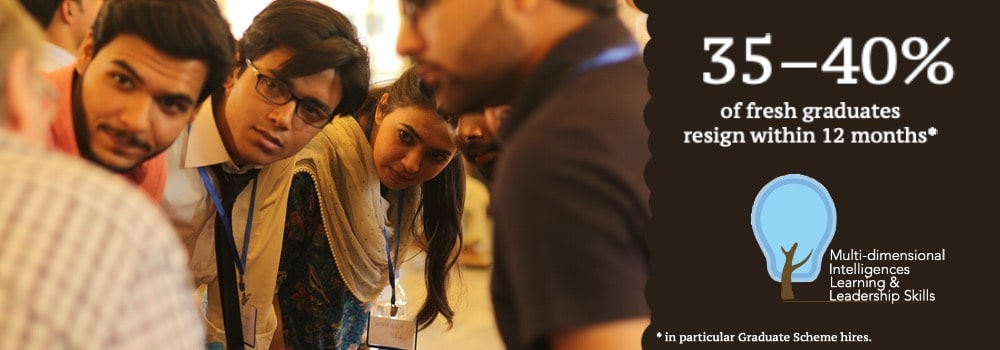
Only a handful of organisations have transitioned to Graduate Assessment Centers for identifying and validating talent, especially for Graduate Schemes and/or Management Associate Programs. According to our survey, nearly 35–40% of fresh graduates resign within the first year, highlighting a deeper issue with early-stage talent alignment.
Candidate Conditioning as the root cause?
Our social conditioning often teaches candidates to say what sounds right rather than who they truly are. This makes it difficult for assessors to validate authenticity or differentiate confidence from competence. The expectation mismatch between Functional Leads, Human Resources and early-stage Candidates further complicates interpretation, with the same workplace concept carrying very different meanings across genders and age groups.
Unfortunately, most universities do not provide platforms for graduate transition from classrooms to corporates. Industry–academia linkages, are the structural gap, while industry sponsored projects the academic missing link. Many students step into interviews with misplaced expectations or little clarity about the industry or their roles within a the organisation they are applying to. Since only a handful of graduates know what they want, it becomes essential for HR and line managers to evaluate each candidate based on psychographic as well as cognitive and behavioural evidence rather than just resume strength or intuition.
The Case for Structured Assessments
MILLS™ has been researching this space (corporates and universities), particularly fresh graduates and early-career professionals, to adapt its tools for more relevant assessment, profiling and screening for recruitment. The primary goal is to improve retention rates for early-stage talent by aligning hiring decisions with measurable data rather than instinct.
The Graduate Assessment Center (GAC) is a indigenously designed, end-to-end recruitment model that connects hiring to retention of high potential talent relevant to the employer organization. It is particularly suited for Management Trainee and Management Associate Programs of mid to large-sized corporates that seek greater visibility and transparency in their recruitment processes.
MILLS™ Graduate Assessment Center acts as an enabler for these organisations by creating an overall Candidate Potential Score through analysis of data collected across online and experiential sources, including structured interviews. It requires client organisations to integrate line and HR functions through Assessor Panels formed by job roles advertised. These assessors attend certification workshops prior to the recruitment campaign to ensure uniform evaluation standards.
During the recruitment process, assessors review online assessment data for preliminary screening, generate a measurable score through structured interviewing on the MILLS™ portal and finally observe behaviours during the experiential assessment center using a standardised behavioural model. The outcome is a holistic, evidence-based understanding of each candidate’s relevance to the organization and readiness for the role.
The goal is not only to identify capable talent but to establish a sustainable and traceable screening process that holds recruiters accountable for post-hire outcomes, forming part of a long-term post-investment review.
The Graduate Assessment Center Model
Each Graduate Assessment Center follows a structured multi-stage process that transforms recruitment into a measurable, evidence-based journey. The process begins with a graduate screening and applicant tracking system that allows participating organisations to manage the entire recruitment funnel on a single digital platform, from application to shortlisting.
Online Assessments:
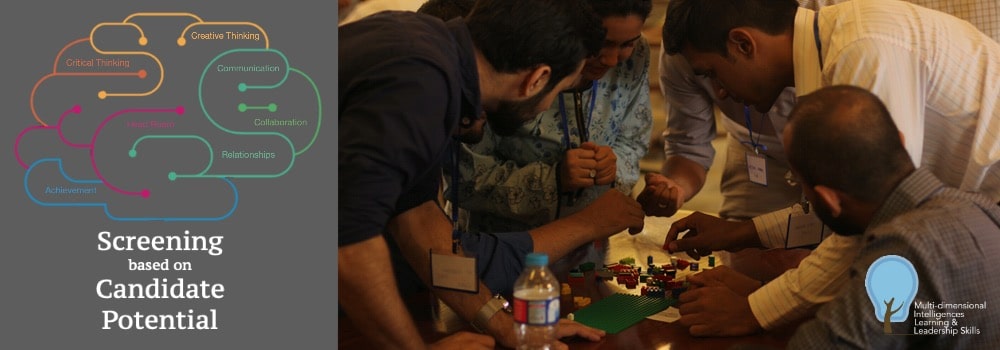
The journey continues through a series of online assessments measuring cognitive, behavioural, and learning skills, including creative and critical thinking, communication, and collaboration. These results are then integrated into the assessor’s dashboard, where each candidate is ranked according to the job role applied for. The data not only supports shortlisting but also informs assessors about the candidate’s cognitive strengths and behavioural tendencies before any interview takes place.
Structured Interviews (ARC Model)
Following the online stage, shortlisted candidates are invited to participate in online structured interviews conducted through MILLS™, platform using the ARC model; Achievement orientation, Relationship (conflict management) and Headroom or Capacity. This structure allows assessors to gather evidence beyond functional skills, so that assessor scores can be standardised across the applicant cohort. Assessors evaluate each section through targeted probes on STAR basis (Situation, Task, Action, Result) recording notes directly into their respective online portals.
Experiential Assessment Center
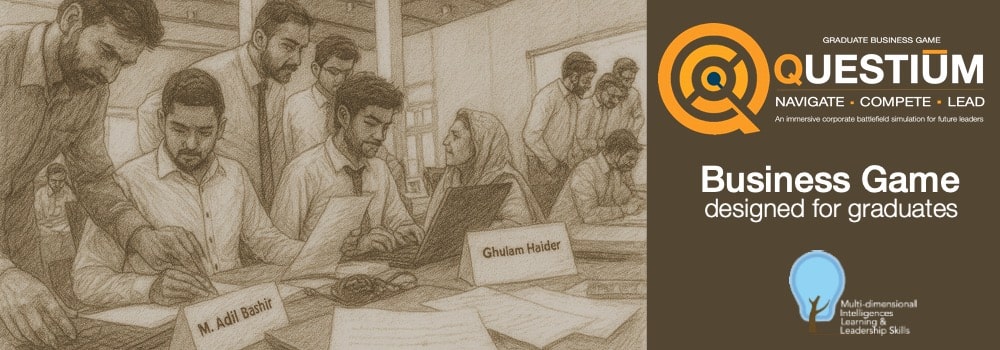
The final and most dynamic phase is the Experiential Assessment Center, where candidates are observed in teams through a mix of simulations and role-based challenges. These include LEGO® Serious Fun activities that measure collaboration and problem-solving, and the Questium Business Game, which evaluates analytical thinking, strategic awareness, and teamwork under pressure. Assessors record their observations against a 25-behaviour framework, ensuring that each rating is grounded in observed evidence rather than impression or bias.
A Balanced View of Potential and Performance
The end result is a comprehensive, data-backed candidate profile that reflects not just what a graduate knows, but how they think, collaborate, and lead, creating a balanced view of potential and performance. This profile is summarised into a 360 Resume Output. Using this consolidated dynamic profile representing the candidate’s learning potential, Assessors then record their Pen Pictures on the candidates, highlighting risks associated with retention and strengths for recruitment.
The Role of the Assessor Certification Workshop
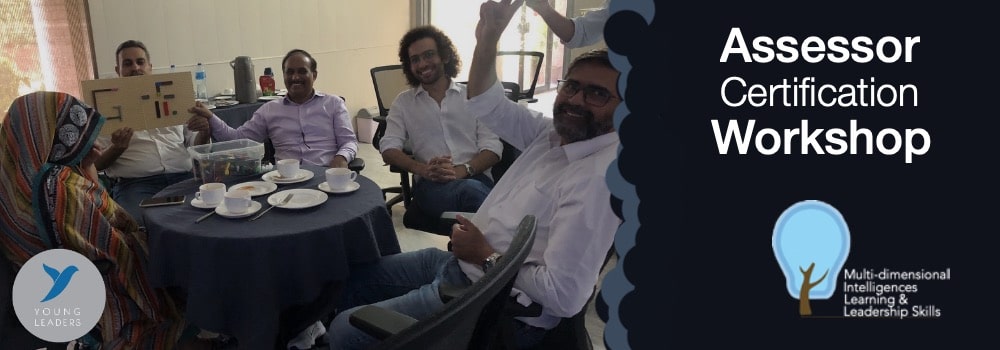
Before each Graduate Assessment Center, assessors from HR and line functions attend the MILLS™ Assessor Certification Workshop. This one-day program helps participants master observation and scoring techniques, calibrate evidence, and build a shared understanding of the behavioural framework. It also acts as a team-building platform, aligning organisational stakeholders around consistent assessment standards.
The 360 Resume – Rethinking the CV
The 360 Resume or standardised graduate resume consolidates self, peer, and assessor data into one balanced profile. Instead of listing degrees and grades, it visualises potential across learning skills, structured interview results, and behavioural benchmarks. This creates a richer, more predictive portrait of the candidate and gives employers a factual baseline for post-recruitment development and retention tracking.
Beyond Recruitment – Measuring Retention
Each Graduate Assessment Center concludes with an optional post-recruitment evaluation where MILLS™ helps clients design Personal Leadership Development Plans (PLDPs) for newly hired associates. Retention rates are tracked as a KPI, ensuring that the success of each cohort is measurable and transparent.
The Graduate Assessment Center reflects MILLS™ long-standing belief that recruitment should be a learning process for both the candidate and the organisation. Structured assessment transforms hiring from an event into an ecosystem, one that supports better alignment, fairness, and retention.
To learn more or host a Graduate Assessment Center or Assessor Certification Workshops for your organisation, write to us at connect@millskills.com