Redundancy of the Resume | The Case for a Standardised Graduate Resume
For most employers, the traditional graduate resume has lost its purpose. CGPAs, superficial project titles, misquoted skills and exaggerated achievements create more murkiness than typical recruitment process can handle. Hence, in the absence of a standardised graduate resume, workplace performance and/or retention risks cannot be assessed, let alone measured accurately. In our graduate job market, where competition is fierce and standardisation is missing, resumes have actually turned into self-promotional documents rather than tools for objective evaluation. With most graduates turning to AI for flowery positioning statements and career objectives, screening is increasingly becoming a challenging during recruitment.
At MILLS™, we have been researching our local population to accurately predict evidence-based potential estimation for candidates. While most job portals offer volume, not validity, and recruiters rarely follow structured interviewing for shortlisting, the result is an ever widening gap between hiring intent and actual job-fit!
Why Resumes Fail to Reveal Potential
Traditional resumes are not job-specific and not format friendly. They are not designed to showcase or benchmark candidates across certain functional or behavioural skills. For fresh graduates and early-career applicants, it is critical for recruiters to understand how they fare on their problem solving skills – both cognitive (individual component) and behavioural (collective or group component). According to our data collected over the past 10 years on both sides of the fence (recruiters & graduates):
- 80% of interviews remain unstructured, with no scoring mechanism for the purpose of potential estimation or creating a evidence-based trail.
- Almost all exit interviews are not standardised and do not complete the loop between recruitment processes and retention rates for an organisation.
- 45% median total cognitive scores across our graduate/undergraduate population, with lower critical thinking scores than creative thinking, creating a blind-spot for recruiters, in particular for technical job roles.
- 38% median scores for the population on behavioural skills such as communication and collaboration, leaving steep learning curves within the first three years of employment.
These patterns explain why many organisations face early attrition or struggle to develop consistent talent pipelines, in particular for management associate or management trainee programs.
Standardised Graduate Resume
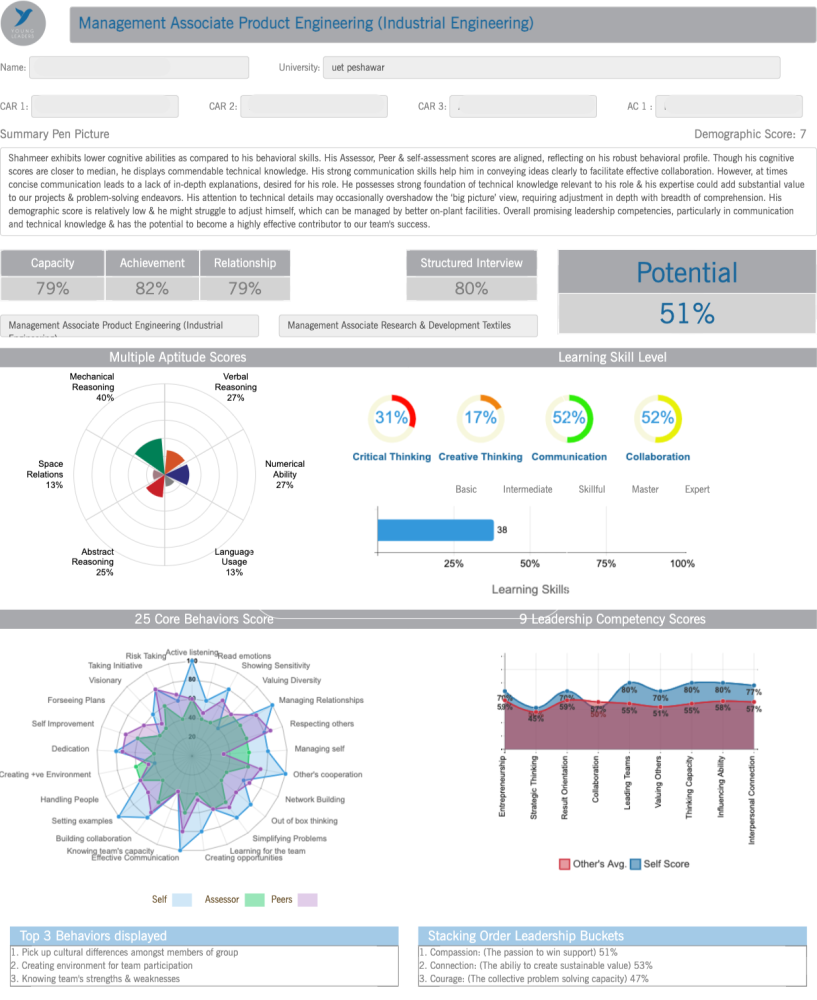
To counter this, MILLS™ Skills has created the 360 Resume, a standardised graduate resume that blends online profiling, 3-way experiential assessment, and structured interviewing. It transforms recruitment from gut-driven to data-driven, capturing both cognitive mix and behavioural readiness of a candidate.
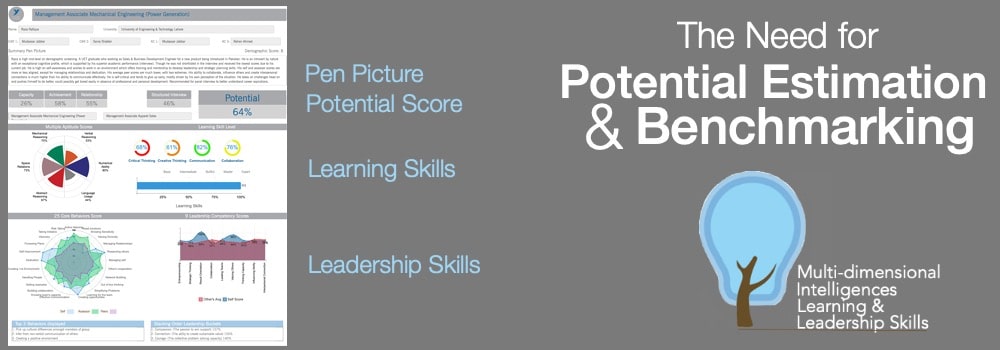
The 360 Resume is not a single document. It is the end-product of a holistic process that mirrors how graduates perform, think, and interact under real-world conditions, integrated within our online and experiential assessments as well as structured interviews. Each 360 resume is automated, connected to various online and experiential assessment modules and readily available to recruiters/assessors on their portals, helping summarise:
- Potential Score – derived from learning skill (cognitive & behavioural components) and structured interview scores.
- Pen Picture – written by assessors (internal to client who are trained) to interpret performance and problem-solving mindset.
- Behavioural Insights – based on peer and assessor feedback across 25 core behaviours converging into 9 behavioural competencies.
The result is a standardised graduate resume that helps recruiters compare candidates by evidence, not appearance.
Inside the Assessment Process
Online Screening
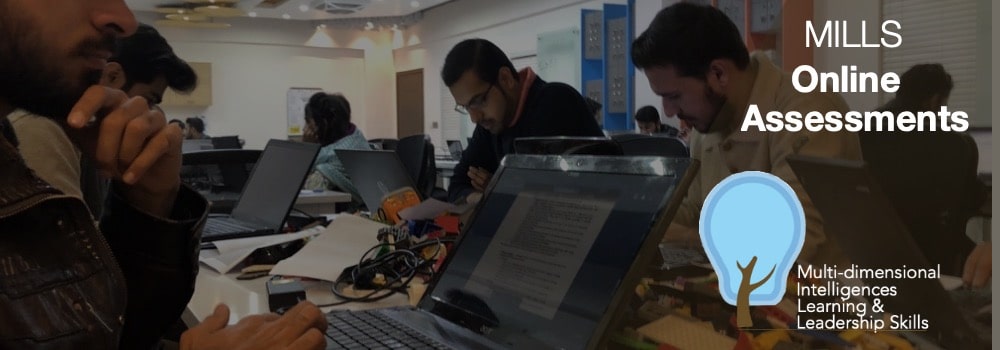
Candidates begin with 4 to 5 online assessments that capture their demographic and psychographic profiles, cognitive mix, behavioural readiness, and capacity to solve problems individually as well as collectively. Our standardised assessments include a 14-factor cognitive test (MAT) and a 25-behaviour model (LSI). This online layer measures reasoning, problem-solving, and interpersonal understanding, the hidden profiles that a resume cannot display.
Behavioural Assessment Centre
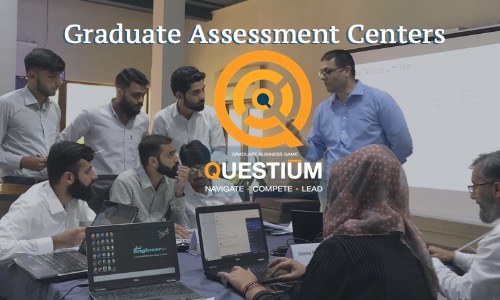
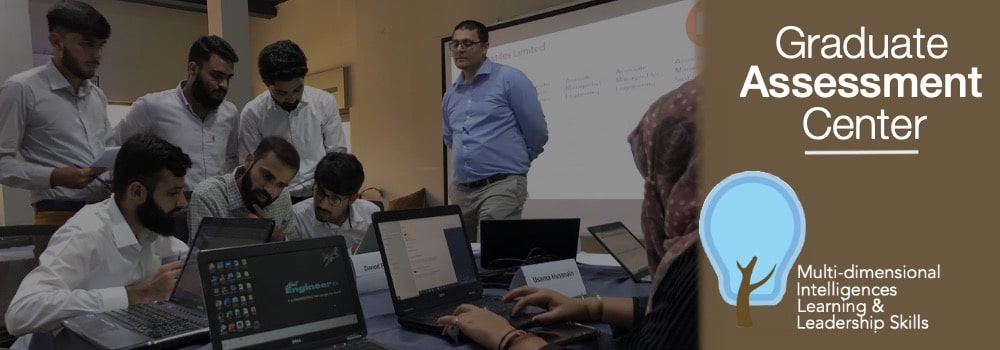
Candidates then participate in immersive challenges that simulate workplace conditions. Activities like the Communication Challenge (LEGO Serious Fun), Questium Business Game, and Group Presentations, test teamwork, influence, and problem-solving under pressure. These exercises generate behavioural data validated through peer and assessor evaluation, ensuring that the candidate’s strengths are visible and measurable and not one-dimensional.
Structured Panel Interview
Unlike unstructured interviews, our panel format benchmarks every candidate on three dimensions: Headroom or Capacity, Achievement orientation, and ability to manage Relationships or wade through conflicts. This helps recruiters see not just who a graduate is today, but who they can become within the organisation as they progress and grow.
Why Recruiters Trust the 360 Resume
When employers assess candidates through this process, they gain access to a verified data set that supports both hiring and development. For instance, one of our clients recorded a 78% retention rate after adopting our Graduate Assessment Center, compared to only 17% using a conventional online screening service. Beyond hiring accuracy, the standardised graduate resume enables post-investment reviews (PIR) and Personal Leadership Development Plans (PLDPs), turning recruitment data into a foundation for training and career growth later. Essentially integrating recruitment and L&D sub-functions for organisations focusing on creating strategic HR functions.
Why Graduates Need It
For fresh graduates, the standardised graduate resume (360 resume) is not just a scorecard; it helps them benchmark their learning skills, before hitting the actual learning curve in their job roles. Becoming “pre-assessed” means being ready for structured career pathways and management trainee programs in leading organisations. Graduates who complete the process during any client recruitment campaign get access to their 360 resume, that helps them discuss their development plans and not just strengths and areas of development.
The Future is Standardisation
Over the past ten years, MILLS™ Skills has refined its online and experiential assessment system through extensive partnerships with universities and employers. Each iteration of the 360 Resume brings us closer to improving our benchmarks on employability potential, where every successful candidate is datapoint followed for over an year. The redundancy of the graduate resume is not a threat, but an opportunity. It calls for a new model that replaces assumptions with analytics and potential with proof. The 360 Resume is our answer to that call.
If you are a fresh graduate, Write to us at connect@millskills.com to get your 360 Resume and position yourself for management trainee and early-career roles.
If you are an employer, please do write to us at connect@millskills.com. We would love to Partner with you to design your next Graduate Assessment Center and build a data-driven talent pipeline grounded in evidence, not opinion.
A sample standardised graduate resume: